About one in eight women in the United States will develop breast cancer during her lifetime. In 2026 alone, the American Cancer Society estimates that more than 320,000 women will be diagnosed with invasive breast cancer.
This Breast Cancer Awareness Month, we are highlighting how women’s health practices can make those early screening opportunities part of everyday patient care.
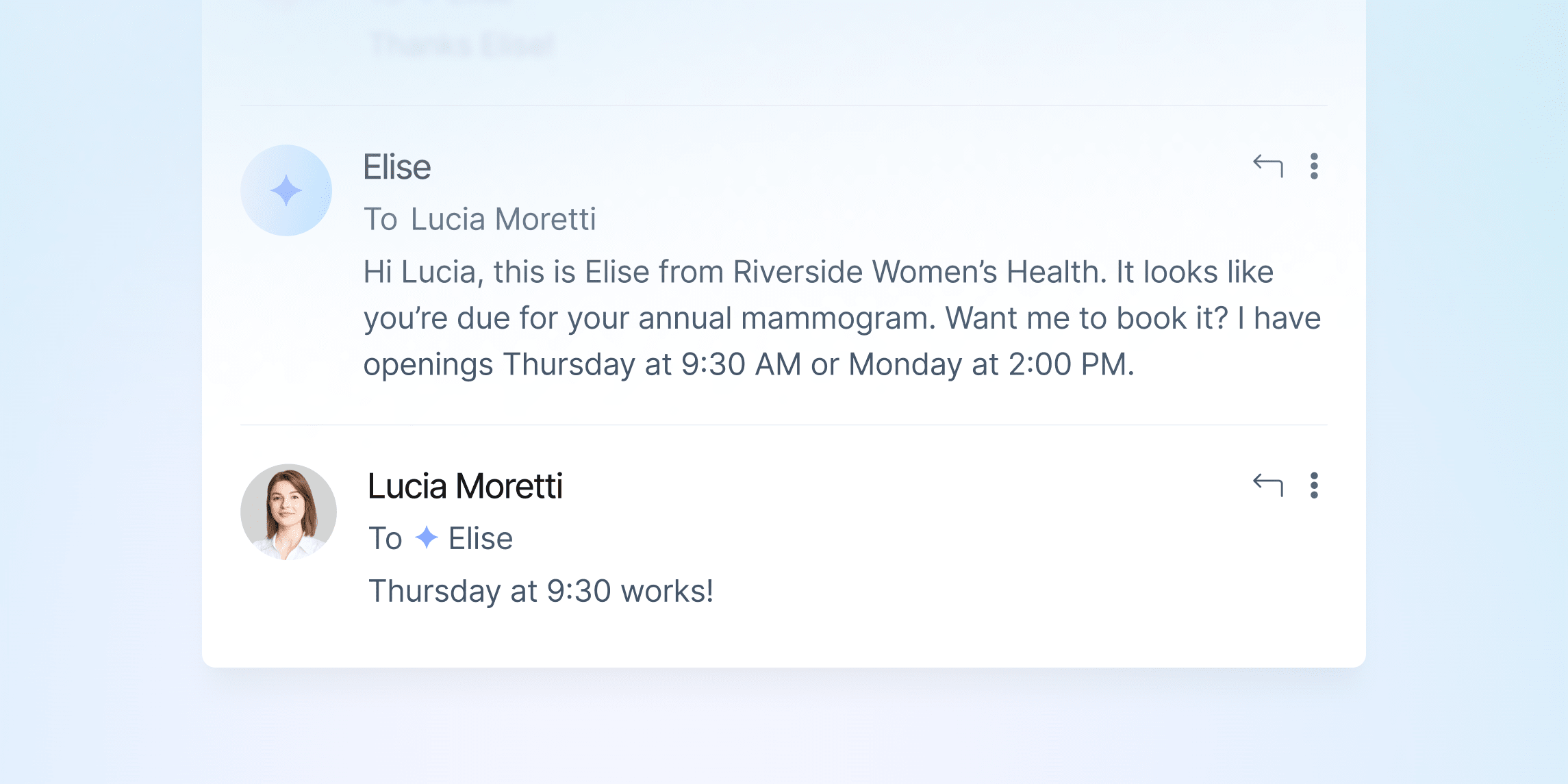
EliseAI helps practices book more mammograms by offering appointments when patients call into a practice and by proactively reaching out to patients who are overdue.
Screening Recommendations And The Gap
The U.S. Preventive Services Task Force recommends screening mammography every two years for women at average risk and between the ages of 40 to 74.
Several major medical organizations, including the American College of Radiology, the Society of Breast Imaging, the American Society of Breast Surgeons, and the National Comprehensive Cancer Network, recommend that women at average risk of breast cancer receive screening mammograms every year beginning at age 40.
As a general practice, patients should proactively work with their providers to determine the appropriate screening schedule based on their health history and risk.
Even with these recommendations in place, many women are going without screening. According to the National Cancer Institute’s 2023 data, about one in five U.S. women ages 50 to 74 had not had a mammogram in the previous two years.
For women’s health practices, addressing that gap means helping patients understand when they are due and making it easier to schedule the screening recommended by their care team.
EliseAI Helps To Close Care Gap In Two Ways
Helping Patients Schedule During Inbound Calls
When a patient calls to book an annual visit, Elise can offer to schedule a mammogram during the same conversation, when appropriate under the practice’s screening criteria.
The patient can act on the offer while she is already engaged with the office, and the front desk does not have to remember to raise screening on each eligible call.
For practices following an annual screening protocol, Elise checks that the patient is at least 40 years old, has not had a mammogram in the past year, and has prior imaging results that support routine screening.
If those results indicate that she should speak with her care team first, Elise does not offer to schedule a routine mammogram. In all cases, the practice’s protocols guide when an offer is appropriate.
Conducting Targeted Outreach Patients Who Have Not Called
Elise’s outbound patient outreach gives practices another way to connect with patients who are overdue and have not called to schedule.
Elise can call or text patients who are overdue for their annual visit or mammogram, allowing practices to bring recommended care back to a patient’s attention and give her a clear way to act on the reminder.
For a busy practice, outreach also takes staff time. Teams have to identify who to contact, make the calls, and coordinate appointments alongside their other responsibilities.
Elise helps carry out that scheduling work so practices can reach patients more consistently and staff can focus on conversations that need their attention.
EliseAI Drove A 65% Increase In Mammogram Bookings In One Month
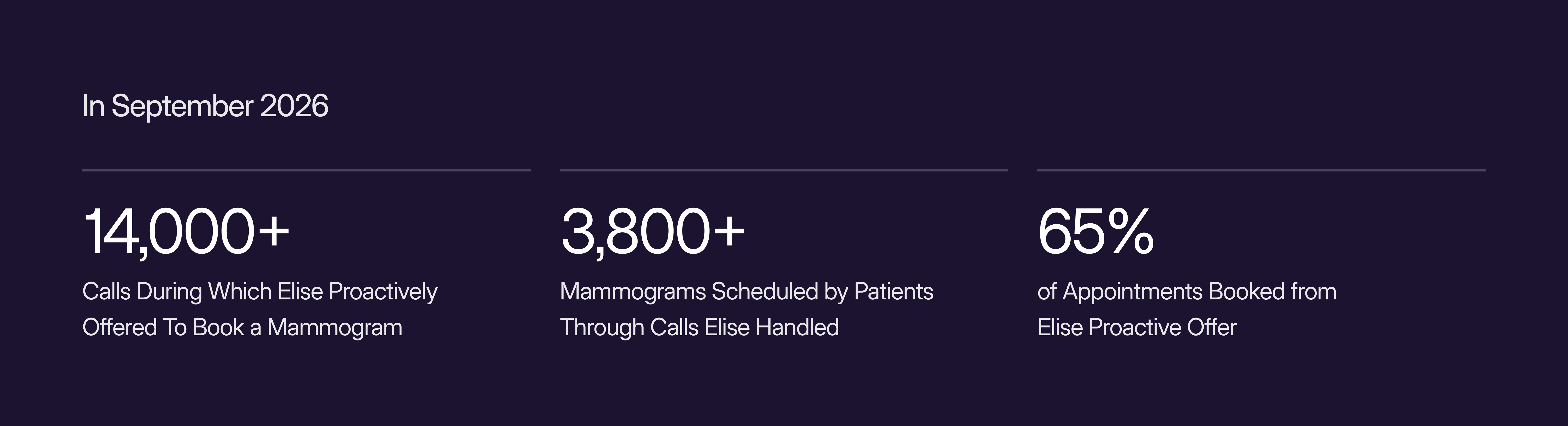
These bookings show how routine calls can help practices connect more patients with recommended screening. As patients complete those screenings, practices can support earlier detection while generating additional revenue.
This Breast Cancer Awareness Month, if you’re 40 or older and haven’t had a mammogram in the past year, contact your provider’s office to discuss when you’re due for screening.
If you lead a women’s health practice, Elise can help your team offer mammogram appointments when patients call and reach out to those who are overdue. We’d love to show you how Elise can make scheduling easier for your patients and your team.
Sources
American Cancer Society, Key Statistics for Breast Cancer (2026)
U.S. Preventive Services Task Force, Breast Cancer Screening Recommendation (2024)
Breastcancer.org, When to Get a Mammogram (2026)
National Cancer Institute, Cancer Trends Progress Report, Breast Cancer Screening (2023)